
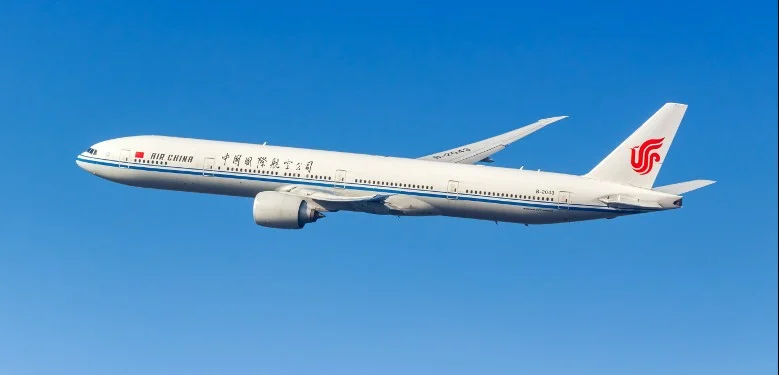
China-Europe airfares surge as Middle East airspace disruptions trigger ticket shortages
The current emergency closures of Center Japanese airspace have dealt one other blow to China–Europe routes, which have been already working underneath tight capability constraints because of the Russia–Ukraine battle.
Probably the most fast consequence of rerouting has been a pointy surge in airways’ working prices.
For instance, resulting from extreme congestion alongside different corridors, Turkish Airways flight TK209 (Singapore–Istanbul) spent a further 206 minutes within the air—almost 3.5 hours—leading to greater than 56 further tonnes of carbon emissions for a single flight.
As combating within the Center East disrupts airspace throughout a number of international locations, together with Iran and the United Arab Emirates, and with airport amenities in Dubai and Abu Dhabi reportedly affected, the area’s three main carriers—Emirates, Etihad Airways, and Qatar Airways—have been pressured to droop or cancel massive numbers of flights. This has successfully crippled the “southern hall,” beforehand seen as a key backup route between China and Europe.
The timing might hardly be worse. Publish–Lunar New Yr enterprise journey, returning abroad college students, and tourism demand boosted by visa facilitation insurance policies have converged, pushing already restricted nonstop capability to its limits. The consequence has been a extreme scarcity of direct China–Europe tickets and a dramatic spike in fares.
Economic system class fares from Shanghai to Paris, sometimes round RMB 5,000(about USD 725), have soared to over RMB 30,000(about USD 4,327)—a rise of fivefold. On some dates, direct tickets promote out virtually instantly after being launched.
This surge stands in stark distinction to the scenario simply weeks earlier.
Earlier than Center Japanese airspace was affected, carriers corresponding to Qatar Airways and Etihad Airways have been aggressively discounting China–Europe routes. Now, with many Center Japanese flights disrupted, discount fares have been changed by skyrocketing costs and widespread ticket shortages.
The Strait of Hormuz handles roughly 1 / 4 of the world’s seaborne crude oil commerce, and about 13.4% of China’s seaborne crude imports come from Iran. Any disruption to transport by means of the strait would straight threaten world power safety and, in flip, have an effect on the broader macroeconomic outlook.
The mixture of airspace instability within the Center East and mounting power dangers is amplifying ripple results on world aviation, making a vicious cycle of battle, airspace disruption, route congestion, hovering prices, and mounting stress on power markets.